
In a Multi-Gig World, the Experience Still Buffers: Why Wi-Fi Is Now the Broadband Product
Opening: When the Experience Breaks, Nothing Else Matters
We’ve all had the same moment.
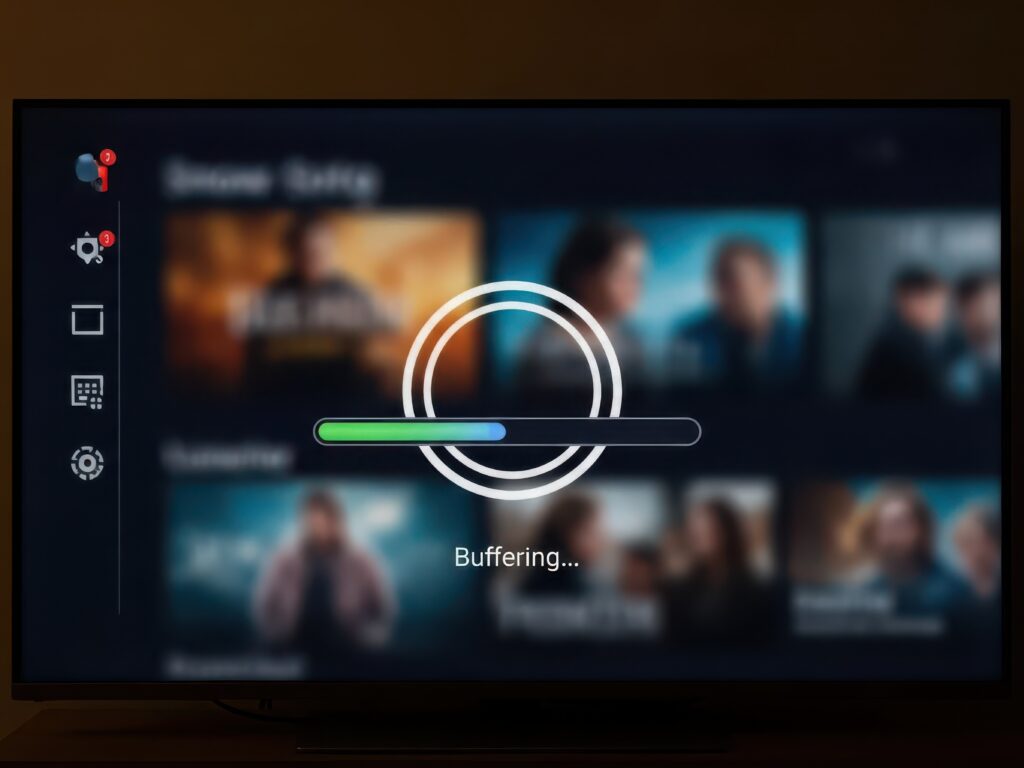
You sit down to watch a show. The platform loads. The picture sharpens to 4K—and then suddenly, the spinning wheel appears. Buffering. Again.
It doesn’t matter whether the content is coming from a world-class streaming platform. It doesn’t matter how advanced the content delivery network is behind the scenes. In that moment, the only thing that matters is the experience—and it’s failing.
Broadband has entered that same phase.
Operators are building faster, more capable fiber networks than ever before. Multi-gig services are becoming widely available. But inside the home, the experience customers actually feel is increasingly defined by one thing: Wi-Fi.
From Content Pipes to Customer Experience
Streaming services offer a powerful parallel because they’ve already gone through this evolution.
In the early days, competition was driven by access, who had the best content library, the fastest delivery, the most reliable distribution. Over time, those capabilities became expected. Today, nearly every major platform can deliver high-quality video at scale.
What differentiates them now is the experience:
- How quickly you can find what you want to watch
- Whether playback is smooth
- How often the show is interrupted with buffering or down-rezing
- Whether it works seamlessly across devices
Broadband is following the same trajectory.
Gigabit, and increasingly multi-gig, has become the baseline. When every provider can claim “fast,” speed loses its power as a differentiator. What remains is what customers actually feel when they use the network.
And that experience is governed not by the fiber outside—but by the Wi-Fi inside.
The “Last 30 Feet” Defines the Brand
Operators have spent years, and billions, building high-performance access networks. XGS-PON deployments are scaling. Fiber footprints are expanding. Capacity is no longer the primary constraint.
But customers don’t see any of that investment.
They experience the network through:
- A smart TV in the living room
- A laptop on a video call in the home office
- A phone moving between rooms
- Dozens of connected devices competing for airtime
This creates a critical reality:
The network delivers capacity. Wi-Fi determines whether customers feel it.
When something goes wrong, when video buffers, when your colleague freezes, when gaming lags, customers don’t distinguish between layers of the network. They don’t think in terms of access versus in-home distribution.
They simply think: my internet isn’t working.
Just like in streaming, the backend can be flawless. But if the last step breaks, the entire experience fails.
Why Speed Alone No Longer Wins
For years, broadband competition has been framed as a race to the fastest speeds. Each new tier, 100 Mbps, 1 Gbps, 2 Gbps, was positioned as a meaningful leap forward.
But the reality inside most homes is different.
Usage is bursty, not constant. Few applications require sustained multi-gig throughput. What users notice instead are moments of friction:
- A video that pauses unexpectedly
- A video conference that freezes mid-sentence
- A delay that disrupts gameplay
These moments carry more weight than peak speed metrics ever will.
As a result, the industry is shifting:
From speed-based competition to experience-based competition
And experience is inherently local. It’s shaped by the home’s environment, the number of devices, interference, layout, and mobility. In other words, it’s shaped by Wi-Fi.
Wi-Fi Has Become a Managed Service, Not a Device
Historically, Wi-Fi was treated as a simple hardware component, part of the customer premises equipment. Deploy the gateway, maybe add an extender, and move on.
That model no longer reflects reality.
Today’s home network is dynamic and complex:
- Device counts continue to grow
- Applications demand lower latency and higher consistency
- Physical environments vary dramatically
Delivering a high-quality experience now requires more than just capable hardware. It requires ongoing intelligence.
This includes:
- Whole-home coverage strategies using mesh and intelligent placement
- Real-time optimization based on device behavior and traffic patterns
- Remote diagnostics to identify and resolve issues before customers call
- Subscriber-facing tools that provide visibility and control
In this context, Wi-Fi becomes more than a device. It becomes a service layer—one that must be continuously managed, optimized, and aligned with the broader network.
New Standards Raise Expectations—But Don’t Solve the Problem Alone
The introduction of Wi-Fi 7 and other advanced technologies is pushing performance boundaries further:
- Lower latency for real-time applications
- Improved performance in dense device environments
- Greater efficiency through multi-link operation
These advances are important. But they are not sufficient on their own.
A poorly placed access point, unmanaged interference, or lack of visibility into network conditions can undermine even the most advanced technology.
The real challenge, and greatest opportunity, is not just deploying the latest standard. It’s ensuring that those capabilities translate into consistent, real-world performance.
That requires integration, intelligence, and ongoing management, not just faster radios.
PON and Wi-Fi Must Function as One Experience Stack
As operators continue to invest in multi-gig PON technologies, the gap between access capabilities and the in-home experience becomes more apparent.
Customers don’t think in terms of network layers. They don’t separate fiber from Wi-Fi. They expect a seamless experience across both.
Meeting that expectation requires a shift in architecture and mindset.
Instead of treating access and in-home networking as separate domains, operators need to think in terms of a unified system:
- The OLT and access network define available capacity
- The gateway and Wi-Fi network distribute that capacity
- Cloud-based platforms provide visibility, control, and optimization
When these elements are tightly integrated, operators can deliver a consistent experience. When they are not, performance becomes unpredictable—and customer satisfaction suffers.
Experience Is Now a Business Lever
This shift is not just technical, it’s commercial.
Operators that treat Wi-Fi as a strategic platform can unlock measurable business benefits:
Operational efficiency
- Fewer support calls related to perceived “slow internet”
- Reduced truck rolls through remote troubleshooting
- Faster resolution times with better visibility
Revenue growth
- Premium managed Wi-Fi offerings
- Tiered services based on experience, not just speed
- Expanded opportunities in SMB and home office segments
Customer retention
- Improved quality of experience drives higher satisfaction
- Higher satisfaction leads to lower churn
- Lower churn improves lifetime value
In a market where subscriber growth is slowing, these factors matter more than ever.
Conclusion: The Experience Is the Product
In streaming, users don’t think about the infrastructure that delivers their content. They think about whether it works, instantly, reliably, without interruption.
Broadband has reached the same point.
The fiber network may be world-class. The access technology may be cutting-edge. But the customer experience is defined in the last 30 feet, over Wi-Fi.
That’s where expectations are set. That’s where satisfaction is won or lost.
In the multi-gig era, the fastest network doesn’t win. The one that feels the best does.